
Designer Style Quotient
Designing with Purpose

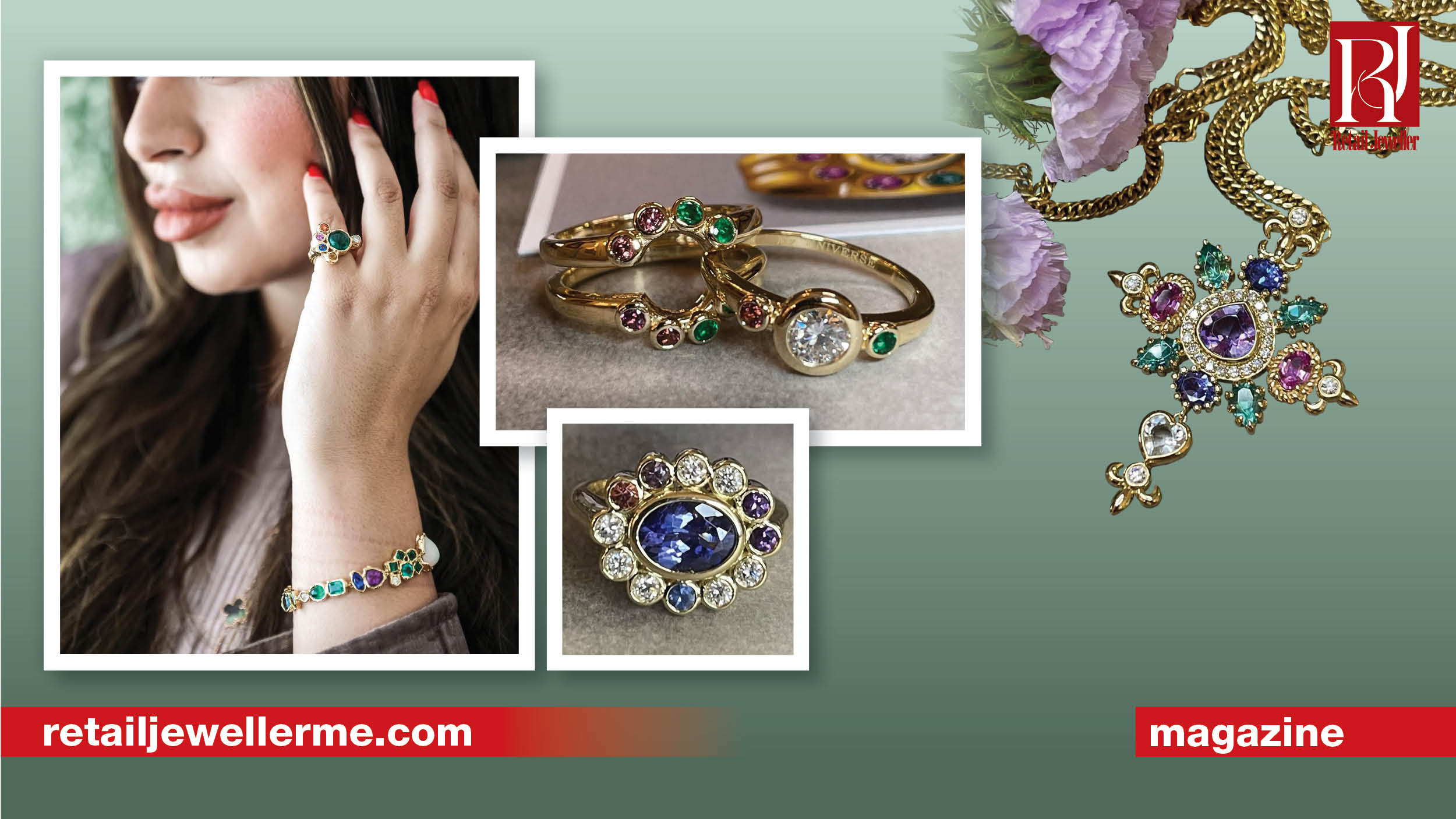
With a distinct identity in the Middle East, Founder Donna Hourani discusses how her brand balances bespoke commissions, curated collections, and international expansion while upholding sustainability and personal storytelling at its core.
Dubai-based designer Donna Hourani has carved out a niche in the Middle East’s fine jewellery landscape by fusing storytelling, spirituality, and sustainability. Since launching her eponymous brand, Hourani has built a loyal clientele across the Gulf, Europe, and the United States. Her collections, often inspired by personal journeys and emotional connections, are handcrafted in Dubai using ethically sourced materials. In this exclusive interaction with Retail Jeweller, Donna speaks about her design philosophy, business strategy, and vision for the future.

Edited excerpts:
You founded your namesake jewellery label in 2016. How did you shape its business model, and what is your production strategy?
The brand grew naturally from my desire to create jewellery with meaning. From the start, I focused on two streams: bespoke commissions and small collections. Every piece uses responsibly sourced 18k gold and natural gemstones that I personally select. I learned lost-wax casting and apply it for certain pieces, while other designs are produced using CAD and finished by skilled goldsmiths in our Dubai workshop. Every design starts with a narrative, and that story guides the entire creation process.
How do you cater to different price points and custom requests?
Simpler pieces like gold charms or gemstone studs start at around AED 430, making fine jewellery accessible. Special projects, like The Bridge with Gemfields, are priced higher, from around AED 13,957 to AED 61,706 depending on the complexity. Bespoke commissions are an important part of our work—they are designed in close collaboration with clients and priced based on materials and design intricacy, across the board, whether it’s a ready-made pendant or a custom engagement ring.
Your customer base spans the Middle East and global markets. What kind of consumer preferences are driving demand, and how have these insights shaped your business?
Regionally, we see strong demand in the UAE, Saudi Arabia, and Lebanon—markets where there’s deep appreciation for handcrafted fine jewellery. Internationally, about 30% of our clients are from Europe, the U.S., and parts of Asia. These buyers often discover us through digital channels. For us, this data informs everything from the scale of production to material choices and marketing tone.
Your brand is stocked across diverse retail environments—from luxury platforms in New York to regional concept stores in the Gulf. How do you manage your product mix across such varied markets?
Each stockist serves a unique clientele, so we’re very intentional with what we offer where. For example, in Saudi Arabia, we see strong demand for bold statement pieces with symbolism, whereas our customers in New York tend to gravitate toward more minimal, design-forward styles with ethical value propositions. That insight shapes which pieces go where—while the core design DNA remains consistent, we curate differently for each retail partner based on local buying behavior and cultural preferences. Our collections are modular, allowing us to adapt colour palettes, gemstone selection, or sizing to better suit a specific market without straying from the brand’s identity.
You’ve built a strong digital presence. Beyond visibility, how has e-commerce and social media shaped your customer relationships or influenced sales strategy?
E-commerce remains central—not just for access but for deepening engagement. Beyond our own site, being listed on platforms like Milanstyle and Fashiola helps us tap into style-conscious audiences globally. We’ve seen that sharing behind-the-scenes content, client testimonials, and design narratives on Instagram builds trust and leads to more custom requests. Rather than pushing product, we focus on emotional resonance. That approach has brought in loyal clients who stay, refer others, and see the brand as an extension of their personal stories.
Sustainability is a big focus in the jewellery industry today. How do you ensure ethical sourcing and environmentally conscious practices?
I personally source our materials to ensure they meet ethical standards. All our gemstones and gold are responsibly obtained. We also pay attention to packaging, using recycled materials designed for reuse. Our small-scale production, often made to order, helps avoid waste. Social sustainability matters too—we ensure fair conditions for everyone involved in making our jewellery. I want clients to feel confident that their pieces were made with care.
Have any major collaborations influenced your business growth or brand visibility?
Collaborations have been valuable. Our work with Gemfields on The Bridge collection allowed us to pair our storytelling approach with their responsibly sourced emeralds, which expanded our visibility and reinforced our ethical commitment. Another collaboration with Dubai fashion label Kage focused on creating pieces in support of a free and independent Palestine. That project was more about values than sales, but it strengthened our brand identity. These partnerships help introduce the brand to new audiences while staying true to what we stand for—purposeful design and responsible jewellery making.
By Maithili Patange


Nishka Jewellery creates buzz about new store via give-away campaign at Safari Mall, Sharjah

Malabar Gold & Diamonds ropes in cricketer MS Dhoni as brand ambassador

Stars champion luxury jewellery maisons across global appearances

Bahraini designer Nour Shamlou launches her eponymous brand at Paris Haute Couture Week

Charmaleena Fine Jewellery takes the experiential approach for ‘Love Locket’ launch

Karat World Gold & Diamonds expands Dubai presence with new Al Muraqqabat branch

Damas appoints Ananthanarayanan Hariharan as CEO as Titan moves towards majority control

Amaar Jewels acquires Australia-born jeweller Secrets Shhh, rebrands it to ‘Secrets by Amaar’

Kalyan Jewellers grows Middle East footprint, launches second showroom in Fahaheel, Kuwait

Dubai Jewellery Group, Jewellers Association Jaipur sign MoU to boost strategic partnership

The Retail Jeweller World Dubai Forum 2021 shines a spotlight on the industry’s brightest achievements

Agile Leadership: What Kept the Boat Floating

A decade of home: Staying ahead in the game

ROI & GMROI : True Measure of Financial Dynamics in Retail
